Before Worst-Case Collin, I had only read one novel in verse. It was an incredibly well-respected, award-winning book. And I kind of just thought it was okay.
So, when the fantastic Instagram book club I’m part of (Middle Grade Groupies) decided to read it for May, I was both excited and a bit wary. The description and title sounded really interesting. I’d been meaning to try more novels in verse to see if my first experience was just a fluke. Plus, my 11-year-old daughter had just read two novels in verse for school, and she wanted to read this one with me.
But I was also wary due to my last experience.
Well, I’m thrilled to report that Worst-Case Collin is fantastic. So fantastic that I’m making it my KidLit Adults Will Actually Like (KAWAL) pick for this month even though I’ve kept to SFF books so far. I’m willing to make an exception.
Why? Well, even though it took a bit of time for the story to get its hooks into me, once it did, I was completely won over. Rebecca Caprara makes Collin’s journey both heartbreaking and endearing, maddening and full of triumphs. Plus, it’s funny — often darkly funny, which is something that almost always speaks to me.
What’s it about?
Synopsis
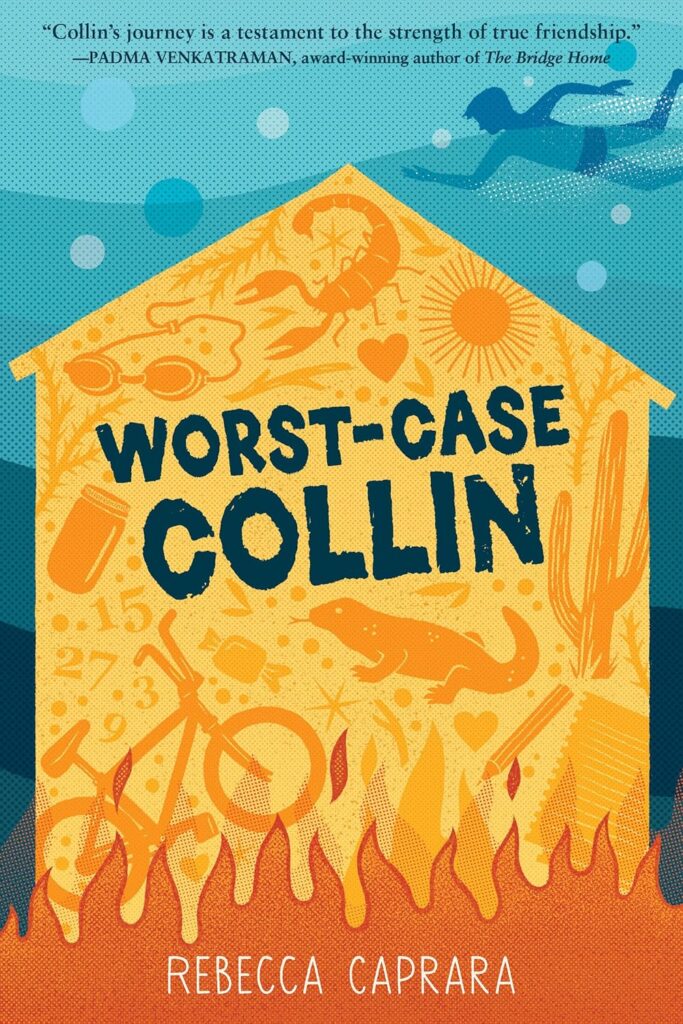
After his mom died in a car crash, Collin became a planner. Someone whose brain insists on preparing for every possible disaster scenario at all times. He clings to routines, precautions, and “worst-case scenario” thinking as a way of making the world feel manageable. But it’s not manageable — especially his dad’s escalating need to buy random stuff and freak out if Collin ever tries to clean or throw anything away. And the more his dad fills up their house, the smaller and more trapped Collin feels. He’s terrified to tell anyone, though, because he’s pretty sure it would get his dad in trouble… and he can’t lose both parents.
Why Adults Will Actually Like It
Anxiety That Feels Recognizable. One of the smartest things this book does is avoid turning Collin’s anxiety into either a joke or a simplistic lesson. His thought patterns feel painfully believable in a way many adults will immediately recognize. Not because everyone experiences anxiety the same way, but because the desire to control uncertainty is deeply human.
Emotional Honesty Without Manipulation. Books about grief can sometimes feel engineered to extract tears from readers. Worst-Case Collin takes a much more grounded approach. The emotions land because Caprara never writes down to her audience. Collin’s fears may sometimes seem irrational from the outside, but the book understands that emotions rarely feel irrational from the inside. That empathy gives the story a surprising amount of weight.
Adults Who Feel Like Actual Adults. One of the quietly impressive things here is that the adults aren’t reduced to caricatures or obstacles. They’re trying, failing, grieving, worrying, and navigating uncertainty themselves. That layered approach makes the entire world feel more believable.
The Humor Lands. While the book never turns Collin’s anxieties into a joke, it understands how to find humor both in well-observed moments with Collin and his friends and in his observations of the world around him, laughing through the darkness even as it takes everything completely seriously.
What Rebecca Caprara ultimately creates is a story about learning to live with uncertainty instead of defeating it — something that’s a far more honest and meaningful goal than dealing with an “issue.”
Looking for middle grade that treats emotions seriously without becoming emotionally exhausting? This one is absolutely worth your time.
Buy Worst-Case Collin here.
Have you read Worst-Case Collin? What did you think?