
Rae Knightly Is Quietly Dusting Off New Ben Archer Plots….
The first Ben Archer book — Ben Archer and the Cosmic Fall — was published in 2018. Now in its third edition (!), it was author Rae Knightly’s first book, and it went on to win a slew of awards and sell gobs of copies and I’m definitely not jealous or anything. Nope.
I didn’t reach out to Rae because she’s awesome (though she is), I did so because many moons ago I posted in a Facebook group asking for indie middle grade recommendations. She was the first to respond, with a fairly substantial list of books that only mentioned hers at the end.
Naturally, when I started going through those books, I began with hers. And I was thrilled to discover the first three books in her Ben Archer series available in one audiobook compilation.
I devoured them — they’re just that kind of book — and thought they would be perfect to highlight for Indie Author Month as my April pick for Kidlit Adults Will Actually Like.
Why do I believe adults will enjoy the Ben Archer books?
The quick version:
- They feel cinematic.
- There’s an X-Files energy to them.
- They invite a “just one more chapter” rhythm.
(Wait, wasn’t this supposed to be an interview?)
I was just about to transition, jeez!
As I was saying, it was — as always — the writing that hooked me. Here’s what Rae has to say about Ben Archer, her other books, and writing in general:

Photo by @photosbycherylkathler
1. How did you first get started as a writer? Was there a specific moment when you decided this was something you wanted to pursue seriously?
I always knew I wanted to become a writer. Growing up, I read most of the teenage books in my local library. But I didn’t feel ready to move on to adult books, and there was no young adult section. So I started creating stories in my head. However, at the time, I didn’t have enough knowledge or patience to write a book.
It took me a couple of decades before my life aligned in a way that allowed me to fully focus on my writing. By then, I had a Bachelor’s Degree in Translation, and I had developed discipline and attention to detail through various work experiences with lawyers and Ambassadors.
My biggest challenge was that I started projects, but never ended them. The first book I wrote was the hardest, but I figured that, even if it didn’t turn out to be very good, the important thing was to finish it. That was the first book in The Alien Skill series, Ben Archer and the Cosmic Fall. After that, I knew I could achieve anything.
2. What did your early path into publishing look like? Were you always aiming for indie publishing, or did that decision come later?
I’m a pretty insecure person and, in the beginning, I felt even more insecure about my writing. I didn’t feel confident enough to approach traditional publishers as someone who had never written anything before. Would they read my book? Would they like it? Also, I was struggling with health issues from an undiagnosed chronic illness, and didn’t feel like I had the energy to negotiate with publishers, their editors, and their timelines.
That’s why self-publishing was the perfect answer for me. I could work at my own pace and keep creative control. It turned out to be an excellent starting point to my career.
3. The Alien Skill series uses multiple points of view in a very cinematic way. Was that a deliberate structural choice from the beginning, or something that developed as the story evolved?
The use of multiple points of view wasn’t a conscious decision. It felt right for the story, and I didn’t even think twice about it. Although – looking back – it turns out that I took a risk using this form of writing, because it’s not something common in books for teenagers.
That said, I think it worked because, for one, I have a very visual mind: stories play out like movies in my head, with a cast of “actors” and even a soundtrack (which you can find on my YouTube channel), and I think that visual aspect is reflected in my books.
Secondly, using different points of view allows the reader to know what’s happening on a grander scale. They become aware of dangers the main character might not be aware of, and that makes them worry for the young hero, because they have a hint of what might come.
Ben Archer is caught in a story that has repercussions way beyond his little world of school and family life. When he meets crashed aliens, he becomes embroiled in a story that reaches beyond Earth and space, and includes secret agents, world governments, evil shapeshifters, and the threat of an alien invasion. By looking through the lens of all these other points of view, the reader finds that Ben is stuck in the middle of them.
4. That gap between what the reader knows and what the protagonist knows helps to shape the experience. How do you decide when to give that extra information and when to hold back?
I guess there’s a right time to divulge information, and I don’t do it all at once. Rather, I give hints of what might come.
Using multiple points of view is interesting because it allows the reader to realize that different characters have different goals that clash against each other, and sometimes they misinterpret things that put them into more danger.
For example, we know that Mesmo (Ben’s alien friend) was kidnapped by a mysterious organization because we can read about this from the kidnapper’s point of view. At the same time, I don’t give away too much about this criminal, because the reader will uncover that through Ben Archer’s eyes.
We also learn that a certain “Bob M.” will help Ben and his mother, and we know his mother has strong feelings regarding this mysterious person, but we don’t know why.
The trick is to plant little seeds along the way that come back and grow throughout the series. That’s where the tension lies, and that’s the type of thing that keeps the reader reading.
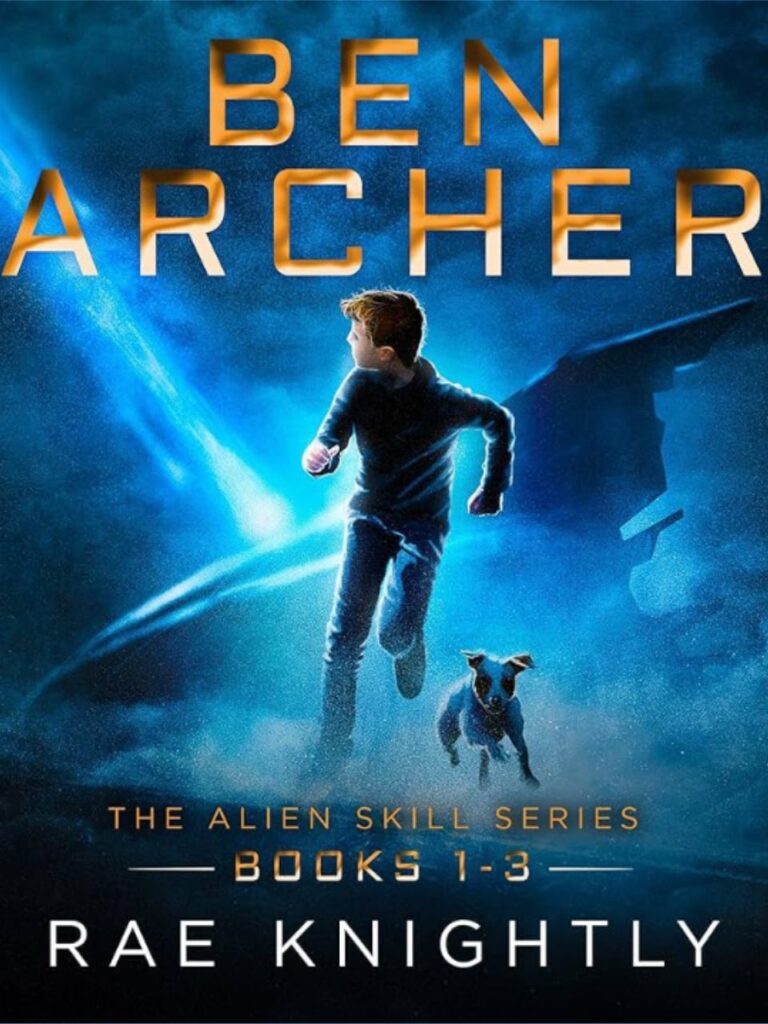
5. For me, at least, there’s a strong X-Files-like energy to the series: government pursuit, hidden truths, something bigger unfolding in the background. What influences helped you shape the tone?
I grew up watching movies and shows like E.T. the Extraterrestrial, X-Files, and Starman.
I think it’s very powerful to have a story with an unnatural element showing up in the real world. It makes the reader wonder “what if…”. What if we weren’t alone in the universe? What if there were aliens out there? What if they visited us? What would they look like, and what do they think of us? Questions like this trigger the imagination.
I remember reading The Magic Faraway Tree series by Enid Blyton as a child, and then looking at trees and dreaming there was a magical land at the top. Or The Dark is Rising by Susan Cooper, which takes place in the real world, but weaves Arthurian elements into the adventure. King Arthur was a real figure whose story became imbued with magic.
The same goes for Ben Archer. He is a simple boy from the “real world” going about his normal life when something extraordinary and unnatural turns his world upside down. Now he’s at the center of something huge and secret, and the entire planet depends on what he will do next.
Isn’t it exciting for a young reader to let their imagination wander and to think: What if a “Ben Archer” and “Mesmo” existed in the real world?
6. The series moves quickly, but still has emotional threads underneath the action. How do you think about balancing momentum with character development?
I don’t think there’s much point in writing a story if the characters are bland. The reader has to connect with the characters in a meaningful way if they are going to care about them, and that happens through emotions. Emotions also drive the story forward, because they make the characters act in certain ways.
At first, Ben Archer is terrified of the alien superpower that he was entrusted with, and it makes him act in irrational ways. He wants to flee from himself, and he’s angry at Mesmo, who he feels is responsible for the situation he finds himself in. His life is upended. He’s had to run away from home and is hunted by government agents and a dangerous enemy. But as the story unfolds, Ben realizes he shouldn’t fear his alien skill. Rather, he should embrace it. And that’s when everything changes for him, and he becomes fully invested in his mission to help Mesmo.
As for Mesmo, the alien arrives on Earth with a sole goal in mind: to complete the mission he was sent to Earth for, in a neutral, unbiased manner. But as the story unfolds, he grows more and more fond of Ben and his mother, and he ultimately has to decide whether to save them or his mission.
In short: emotions drive the story forward.
7. Some aspects of the alien culture (particularly around balance, respect, and connection) can be read as having an almost Indigenous-coded sensibility. Was that an intentional influence, or something that emerged more organically as you built the world?
The Alien Skill series is precisely about balance, respect, and connection with our natural environment. It gives the reader a global vision of our world and what we are doing to it. Our lack of respect for Earth indicates to the aliens that we are a threat that should be eliminated before we can settle on other planets.
This influence came to me from having traveled to other countries and feeling amazed by what I saw. I’ve seen whales up close, the Milky Way on a dark night, fields of flowers blossoming in the desert, Mayan ruins covered by jungle…
This awe that I feel for the planet we live on definitely seeps into the Ben Archer books. Large landscapes play a major role in the series because they show how very small the characters are, yet their actions can have a huge impact on the world around them.
8. I haven’t had a chance to check out your books beyond Ben Archer yet, but your YA standalone The Knowledge Seeker came next, followed by your ongoing Lost Space Treasure series, which is now your current major project. Both lean a bit older than Ben Acher. Was that a deliberate creative shift, or simply a reflection of the stories you wanted to tell?
There’s actually a simple reason for this shift to a more complex storytelling.
I plotted The Lost Space Treasure series thirty years ago, always knowing I would write it someday. However, when I was finally at a stage in my life where I was ready to start writing, I suddenly realized that I had absolutely no experience, and The Lost Space Treasure felt like too big of a project.
So I decided to write a “simple” story first: something “quick and easy.” Only… that “quick and easy” story turned into six Ben Archer books!
It was only after I finished writing Ben Archer that I felt experienced enough to take on a YA dystopian novel like The Knowledge Seeker, or a complex space opera series like The Lost Space Treasure.
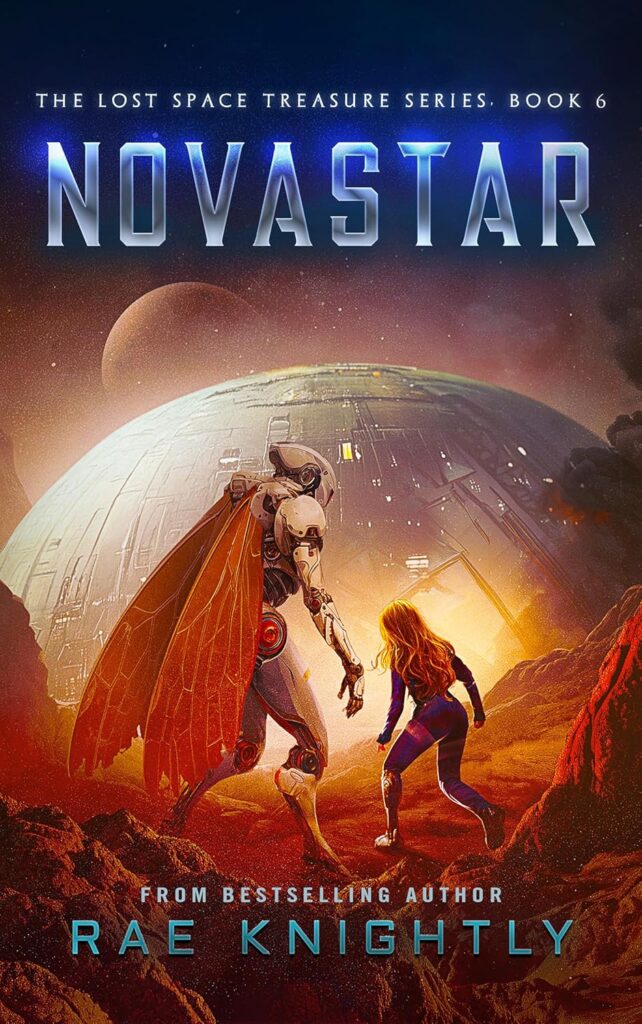
9. Book 6 in The Lost Space Treasure series, Novastar, comes out on May 30, and the description hints that this is the end of the story… but maybe not entirely. How did you think about giving readers a satisfying conclusion while still leaving room for the possibility of more?
It’s important to give readers a satisfying ending – one that answers all their questions – except, maybe, one…
I like to leave a small thread, or a small doubt, hanging, because whether I write another book or not, at least the reader can continue on with the story in their imagination. I think this is a powerful writing method, which allows the reader to think about a book long after they finish it.
Also, at some point in my writing, I suddenly realized that Ben Archer and Trin Moonrise’s adventures were taking place in the same universe, and that they were connected. I hesitated to connect them, but when I saw that readers were all for it, I dove right in! I’m very grateful readers have supported this decision, since it allows me to continue expanding on this universe that I’m exploring with them.
10. Even in book descriptions, The Lost Space Treasure series feels much bigger in scope than Ben Archer, with more worlds, more factions, and more moving pieces. Did Novastar require you to think differently about pacing and payoff because of that scale?
Absolutely! The Lost Space Treasure is a massive leap from the Ben Archer books because, whereas Ben Archer takes place in the real world, Trin Moonrise’s story is happening in a corner of the galaxy that has nothing to do with Earth.
When I was ready to start writing Trin’s story, I had the whole adventure plotted out, but then I realized the canvas behind the characters was blank. They were basically running around in front of a green screen with nothing showing up on it. So I had to pull back and create a whole universe that Trin Moonrise’s story could take place in. That included planets, aliens, civilizations, histories, governments, space travel technologies, etc.
It was a fantastic challenge to create this universe in which I couldn’t use “Earth terms” like car or seagull or apple. It was a wonderful creative process that really allowed me to go wild with my imagination while still staying in the realm of credibility.
The next challenge was to have the characters move around in this universe while not boring readers with descriptions. This exercise drastically improved my writing.
11. Across Ben Archer, The Knowledge Seeker, and The Lost Space Treasure series, you seem to return to questions and themes related to identity, control, and hidden truths. Is that exploration intentional or just something you naturally gravitate toward?
I’m interested in exploring the question of what it means to be human.
It becomes an interesting exercise to look at our species from the alien’s point of view. Mesmo says, “My cold analysis of the data leads me to conclude that humans deserve to be crushed once and for all, yet my heart aches to embrace each and every one of them individually. How does one mend such a paradox?”
On the one hand, he sees how humans as a species are mistreating their planet, meaning they should be eliminated. But on the other hand, he’s gotten to know individuals like Ben and his mother and has grown fond of them. He doesn’t quite know what to do about that.
As for Trin Moonrise, her search for her “humanity” goes far. At first, she doesn’t even know if she’s an android or a mortal being. She doesn’t know if she has a soul or is made up of wiring and metal. The more “human” she becomes, the more overwhelming it becomes, because being a mortal means experiencing strong (sometimes unwanted) emotions, and it also means death is inevitable. How do you live with the weight of discovering your life is finite?
These types of questions allow readers to dive deep into the characters’ lives and follow them as they come to terms with their identity.
As the heroes become more confident in their identity and decisions, they clash harder and harder against their enemies, who represent the opposite of what they stand for. They also become more knowledgeable about their skills and missions, meaning their enemies have less and less control over them, or can’t hide the truth from them anymore.
12. Looking forward, what’s next for you creatively? Do you plan on continuing any of your existing universes, or will you move into something entirely new?
Once Novastar publishes on May 30th, I will go back to The Knowledge Seeker and write a second book. I’ve been very impatient to get back to Eodain’s story, and I think readers have, too.
I never expected this YA dystopian novel to do as well as it did, which is why I set aside book 2 for a long time, but I’m really glad it hooked readers, as it allows me to explore Eodain’s world some more.
Besides that, I asked my readers if they wanted more Ben Archer books, and they overwhelmingly voted “yes”, which is really fun for me because it allows me to dust off Ben Archer plots I’ve quietly been working on in the background, without really knowing if they would ever see the light of day.
Other than that, I have plenty of story ideas I hope to explore in the future.
You can learn more about Rae here.
And click here for my full KAWAL review of the first three audiobooks in the Alien Skill series.