One of the Reasons R.A. Dines Decided to Go Indie? To Publish Her Science Fiction… Before It Became Non-Fiction
I’ll admit it — I didn’t know a thing about R.A. Dines until she started showing up in my social feeds while searching for middle grade science fiction. But her book immediately appealed to me, and every time it popped up, it was a nice little reminder to get off my butt and buy it.
(See? Marketing works!)
I finally took the plunge a few months back… and finally had time to read during downtime on our summer family vacation. At least until my 11-year-old daughter asked what I was reading, “borrowed” it, and then refused to give it back because she was so into it.
When I finally was able to read the book, it was easy to see why.
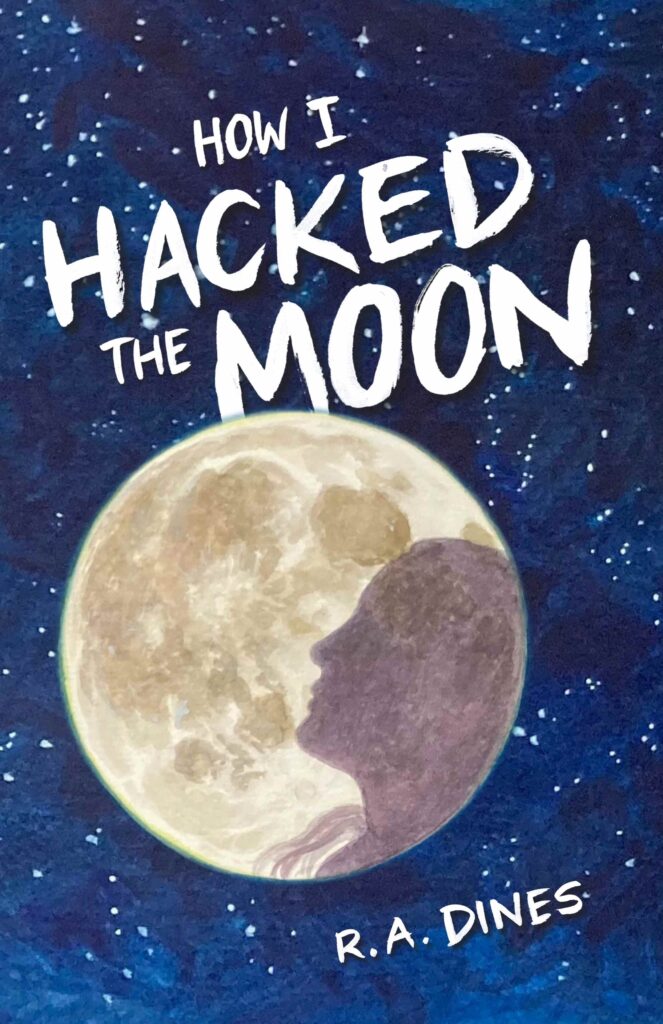
How I Hacked the Moon isn’t just a great debut. It feels both timely and prescient, while also finding a way to speak directly to hopes and fears that I can tell you firsthand adolescents and teens today are having. It is a weird, scary, unsettled world to grow up in right now, where humanity genuinely feels like we’re on the precipice.
Of something bad? Something good?
…Yes. Maybe. Hard to say. Probably both.
Anyway, her book manages to capture all of that while still being about something very specific and insular, and I’m thrilled that she agreed to chat about it and about what’s coming for her.
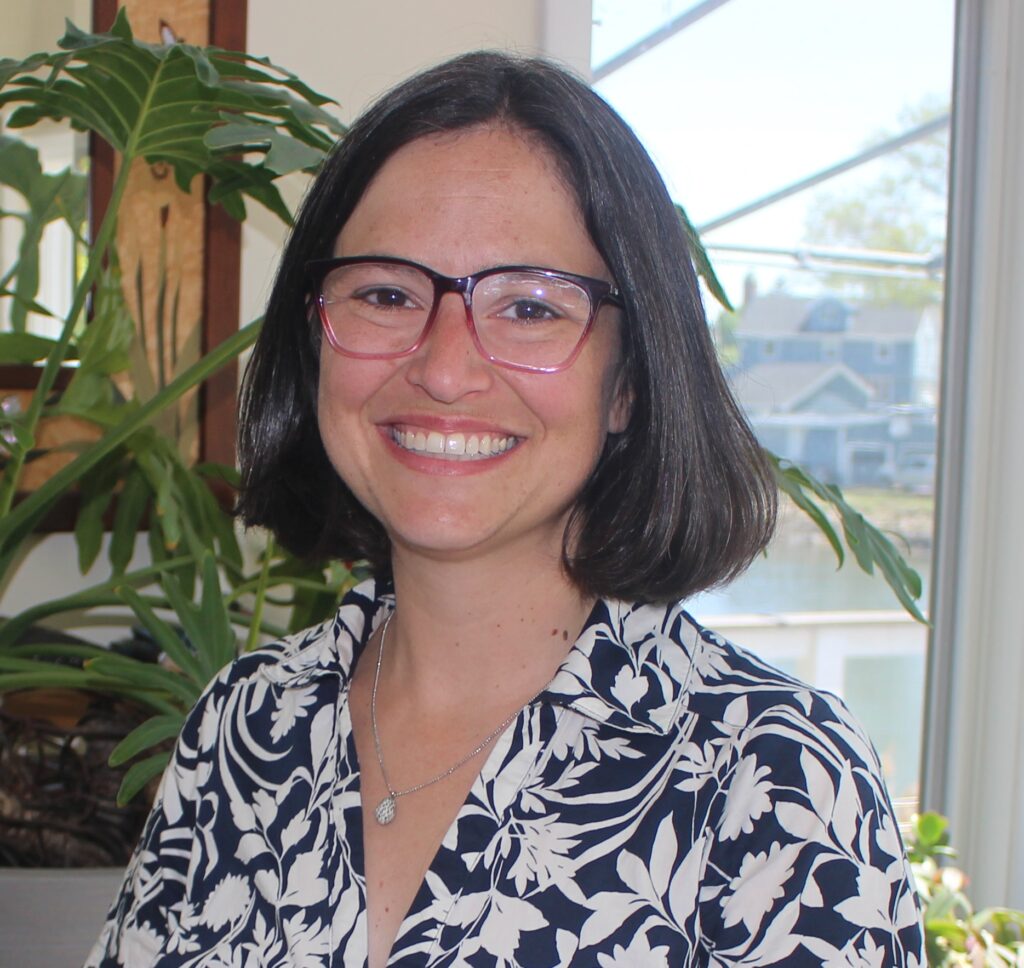
1. You spent roughly two decades working in technology before publishing How I Hacked the Moon. Looking back, what finally pushed you from “someone writing a book” to “someone determined to get a book published”?
There were a few things that collided internally and externally that took me from “a tech exec with an unpublished manuscript” to a published author. In my personal life, I was increasingly unhappy and exhausted by my career. I knew I had to make a change or risk total burnout. When I was a kid, I had always wanted to be an author (a universal truth for all authors, right?), and as I neared my 40th birthday, I increasingly worried that I wasn’t going to realize this dream, EVER. (PS – feel free to call this a midlife crisis, I won’t be offended).
At the same time, the dystopian world with technology companies ruling the world started to feel like it was coming true. There’s even been talk of an AI data center on the moon! I felt like I needed to publish this book before the science fiction became non-fiction.
Long story short, I hopped off that corporate treadmill in January 2025 and haven’t looked back since. I’ve been documenting my ex-tech life in a newsletter here.
2. Once you decided to publish, were you determined to go the indie route right from the beginning, or did you spend time in the “query trenches” before switching gears?
I queried How I Hacked the Moon for several years (while I was still working in my day job) and received a lot of interest and a lot of rejection. I’m glad I went through the query process because I learned a LOT about the publishing industry and also grew an even thicker skin than I had previously. What ultimately convinced me to go indie, however, wasn’t failure, but realizing I wanted to control my own destiny. I didn’t want to wait any longer to find the right agent and a publisher. I wanted to assemble my own team of editors and designers and do my own marketing. I like doing all of that stuff, and I think I’m pretty good at it! So I set off down the indie path and haven’t looked back.
3. I’ve read where you said that Moon Girl existed in various forms for years before this story came together. What stayed consistent about her over all that time, and what changed as the book evolved?
It’s true that “Moon Girl” is a character who has popped up in my writing for years. I’ve been a pretty prolific short story writer my whole life, and I have several short pieces that feature “Moon Girl” at various ages. She didn’t always have that nickname! Most of her stories weren’t even science fiction! In all of her iterations, she’s always had a best friend who she relied on and admired. She’s always seen herself as exceptionally ordinary in academic achievement, appearance, personality, etc. She’s got more sidekick energy than main character energy. But over the course of How I Hacked the Moon, she finds her main character energy.
4. One of the things that stood out to me is how believable the Lunar Coding Complex feels. We get a detailed sense of life inside that world, but only glimpses of the larger society beyond it. Was that restraint intentional from the beginning, or something that emerged in revision?
This was intentional from the start! I set out to write a book that felt extremely insular, maybe even a little claustrophobic at times. I was inspired by the “bottle” episodes of TV shows (P.S., Den of Geek has a good explanation of a bottle episode here). Doctor Who does this SO WELL. The basic idea is that you trap a small number of characters in a space and let the drama play out. I took some liberty with this format, but it was my starting place.
But don’t worry, all will be revealed about life back on Earth and the larger shifts caused by AI and technocratic society structures in later books 😉
5. The children at the Lunar Coding Complex are growing up inside a system they didn’t create and don’t fully understand. What interested you about exploring that dynamic through a middle grade story?
Books that had these themes were always my favorite as a kid, and I still enjoy them as an adult. Exploring a structure through the eyes of a kid is such a great way to highlight hypocritical and illogical systems. Even though I worked in the tech industry for two decades, I’ve been increasingly wary about the level of control tech companies have over our daily lives. I wanted to explore the path that we’re heading down right now through the eyes of children to expose how ludicrous this world is.
A shorter explanation is that I just never got over reading The Giver by Lois Lowry.
6. The book raises questions about surveillance, corporate control, and AI, but it never feels like it’s trying to lecture readers. How did you approach balancing those ideas with the adventure and character-driven story?
I’m glad you feel like it’s not too heavy-handed! One of the goals with the book, and when I do school visits, is to provoke readers and students to think critically for themselves and come to their own conclusions about AI and corporate control. But that never took a back seat to my primary goal, which was for the story to be fun and engaging. I really channeled my 9-year-old self, who was hungry for adventures (especially about girls and kids who weren’t “the chosen ones) into this story. I wrote the book I wish I could have read at that age.
7. One of my favorite parts of the novel is the friendship between Moon Girl and Jo. Theirs is a dynamic that shifts over the course of the story, but by the end feels as strong as it was in the beginning. Other stories might have turned this into a journey of Moon Girl finding her own strength and growing away from Jo, but I believe you do something here that’s more nuanced, allowing both characters to evolve together. How did you decide to take this path?
There are already so many stories about a protagonist outgrowing a friendship and finding their own path, etc. etc., but in real life it’s never really quite so simple, is it? Because while you’re growing and changing, your friend is also growing and changing, even if you can’t see it as clearly. So I wanted to write a story that showed a really complicated friendship that was more than friendship, almost like family. You don’t outgrow your family. You might change and they might change, but you come back to each other in the end. Friendships at this age can be so intense, both good and bad, so my goal was to try to capture it, as best I could, in a way that I hope kids will find relatable.
8. Without getting into spoiler territory, Sig’s arc is one of the most interesting shifts in the book, going from trusted mentor to potential enemy and then somewhere more complicated. Was that trajectory always part of your plan?
Sig is one of my favorite characters! The evolution of the character was a bit round-about… Sig was originally actually two different characters (both teachers at the school) that merged into one. There was always a reversal with this character, but it became a double reversal! It’s so hard to talk about him without spoiling one of my favorite twists in the book, I think I’ve already said too much.
10. At its heart, How I Hacked the Moon feels like a story about trust: who (or what) gets it, how it’s earned, and what happens when it breaks. Was that always the central theme for you, or something that emerged as you wrote?
I went back to my original outline and notes for this book (from 2017!!) to confirm this: no, trust was not an original central theme of the book. I was originally more interested in exploring themes of identity (notice that you don’t learn the main character’s real name until the last chapter of the book!), found family (which is why the relationship with Jo is so important to evolve, not die), and big tech oversight. The themes of trust showed up when I actually wrote the book. When I reread it, I realized this was more of the central motif, so I played it up during re-writes. For me, it still ties back to my original concepts, though… trust in yourself, trust in your peers, trust in the system, it’s all intertwined.
11. The ending leaves plenty of room for the story to continue. You’ve mentioned that the trilogy titles are designed to form a continuing sentence, starting with How I Hacked the Moon and continuing into Book 2, With a Robot Army at My Back. When did that structural idea come about, and how does it shape how you think about the series as a whole?
I’ve always planned for this to be a series, with a very rough sketch of the overall arc of the story. When I was brainstorming book 2, I realized I really wanted to write it from the perspective of Jo (the MC’s best friend). I realized this was a fun opportunity to write each book from a different character’s perspective. That realization opened up a creative door for me, and I knew I had a prequel to write from Xan’s perspective. Then I got an idea for a short story about Sig. And I’m planning book three to be from Qat’s perspective (tentatively called “Meanwhile Back on Earth”). I don’t want to leave Dovrin out, so I’ll have to figure out what book he’ll get to narrate. I guess this kind of shows you that I don’t totally know where this series is going!
12. You’ve said that How I Hacked the Moon grew out of a long process of iteration and development. What does your writing process look like now that you’re publishing in an established world? Are you outlining tightly, or still discovering as you go?
Since I have the world building (at least on the Moon) all established and the characters mostly established (there are a few new ones that are coming into the story), I’m working in a much looser fashion. If you’re familiar with the planner vs panster terminology, I was a strict planner for book 1. I wrote a detailed outline and then wrote the book backwards, from the ending to the beginning.
With Book 2, I started with a looser outline and did a lot more improvising as I went. In fact, I completely rewrote the conclusion of the story during revisions! Book 3 I may completely write by the seat of my pants. I know where it starts and where it needs to end, but I don’t know yet what happens in the middle. I have a lot more confidence now that I know these characters and this world, and I can let things play out in a more organic way.
13. The middle grade audience is an age group that sits in a fascinating in-between space: old enough to handle complexity, but still open to hope in a way adult fiction often isn’t. What do you enjoy most about writing for middle grade readers?
I’ve always loved talking to kids ages 8-12. They are fully formed people with complex ideas and emotions, but they’re still kids with wild imaginations. They’re open to all the possibilities of the world but aren’t yet cynical teens. They’re trying to figure out the world and who they are and how they fit in it. Writing for them takes so much nuance… finding the right balance of age-appropriate content without talking down to them is really tough, but it’s what I enjoy the most. I think most adults underestimate kids this age, and my goal is to always take them 100% seriously. They aren’t mini adults, but they aren’t children either.
14. You’ve talked about working on a fantasy project inspired by creatures you and your son created together. Will that be your next project after the Moon Hackers series is complete? And how different does it feel building a world collaboratively with your child versus building one entirely on your own?
My son and I have been exploring the world of the Mackys since he was three years old. A Macky (his invention) is a tiny, dragon-like creature that exists alongside humans, but most people don’t get the opportunity to see them. It’s been so fun to work on this with my kid, because I get to teach him about plot, characters, worldbuilding, and all sorts of fun things. And he really loves learning about it and truly understands it, even though he’s only seven years old! We were watching a movie the other day (I think it was Wall-E) and my son said, “Mom, when is the inciting incident going to happen?” and I almost died laughing.
We started writing a chapter book together last year based on the world of the Mackys. When I’m stuck on Moon Hackers, or just need a break, I switch over and work on the Macky project. He’s doing pretty much all the worldbuilding, and I’m focused on plot and character development. So it’s definitely my next project that’s furthest along, and the first book may come out before the Moon Hackers series is complete!
You can learn more about R.A. Dines here.
Absolutely fantastic interview!