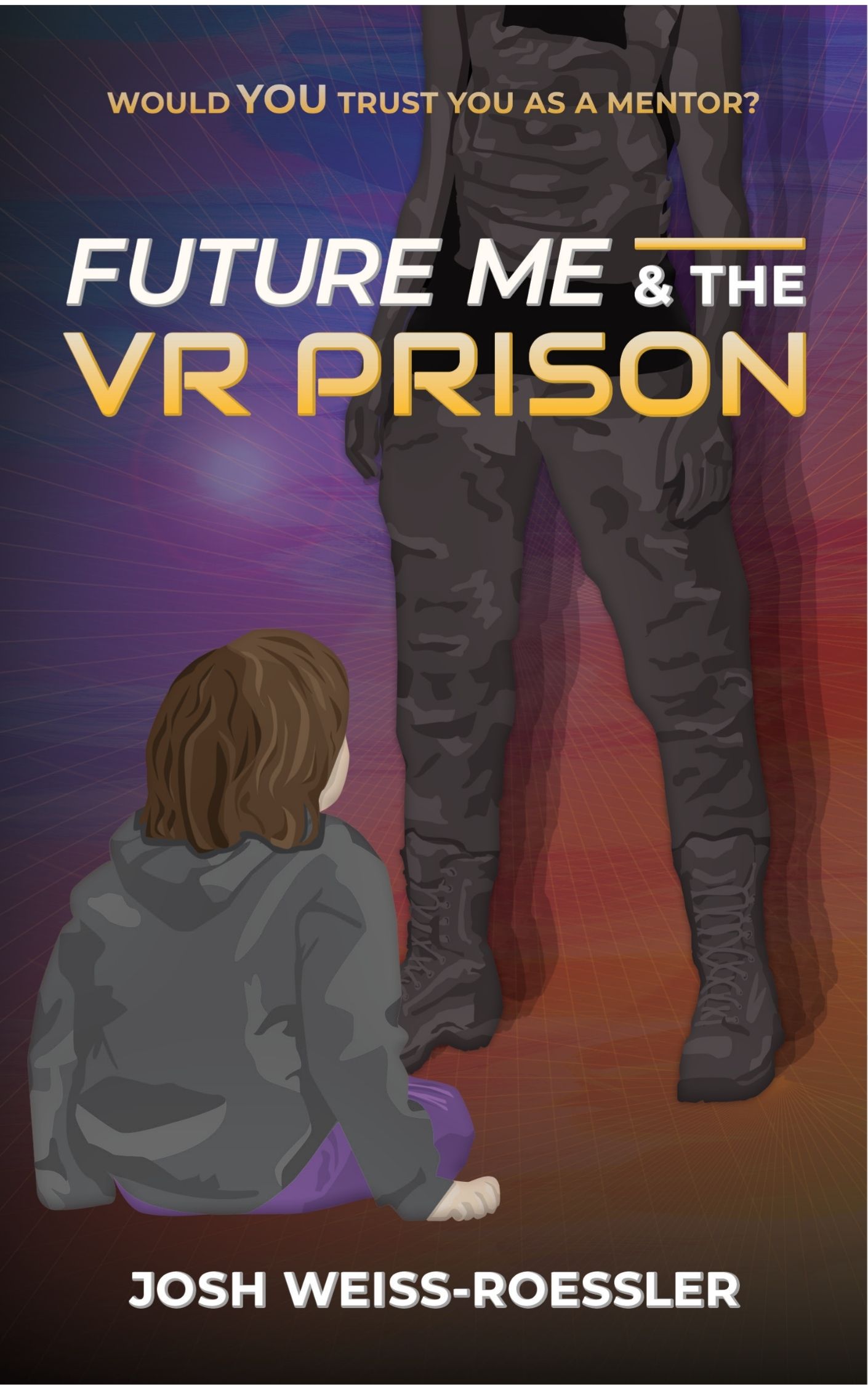
Stop me if you’ve heard this one before: in 2020, the world turned upside down. Longstanding structures we’d come to depend on suddenly weren’t available to us. Things we had previously known to be true proved to be comforting stories we told ourselves. And the prevailing message was some version of, “Yeah, this sucks, but what are you gonna do?”
As Covid took its worldwide tour, we all experienced this to one degree or another. But, as with most things in life, the impact was a lot easier to see with kids. And when everything went down, mine were five and eight.
The 5-year-old mostly blew through it. Sure, she had virtual kindergarten, which I recommend to no one, but for the most part she just got more hang-out time with two parents who were trying to go insane slowly instead of all at once. NBD.
My 8-year-old, though? Yikes. There were times when I felt like I could see the betrayal in his eyes. This wasn’t what we told him the world was like. How could it have happened? What did it mean? Was anything safe anymore?
I’m sure at least some of that was me projecting onto him, but wow was that a rough year-and-a-half. Actually, no. Far longer, because the experiences shaped him in ways that have stuck with him to this day.
One of the biggest? Going from spending maybe two hours a day on screens to hopefully pulling him away for at least two hours. Because, by necessity, technology became our lifeline. Our outlet. And one of the few things that could easily fill days that were often incredibly empty and boring for kids. At the same time, I felt like I could see it trapping him. Seducing him. Shrinking his world even as, in some ways, it enlarged it.
Naturally, This Made Me Start Writing About Time-Traveling Killer Robots
Sounds like a joke. Isn’t a joke. Because the whole thing got me thinking about that moment — again, that most of us experience to one degree or another — where the carefully curated world of our childhood, imagined into existence by our parents, our life experiences, and the things media and educators tell us, is ripped away and revealed to be… if not a lie, exactly, at least a softening and a blurring of reality. And once it’s gone, how do you react? What do you do then? How do you move forward?
That’s one half.
The other half was our relationship with technology in general, pulled into stark relief by a pandemic that said, “For the love of god, stay inside. Look, we’ll make it worth your while. Here’s seven million hours of funny cat videos. Also, you can learn to do practically anything on YouTube. Also, remember how you wanted to write a novel / make a video game / become an influencer? We give you the gift of time and nothing else to do.” On the one hand, our technology was wondrous and helpful and made it possible to do amazing things. On the other, it sucked us in, ate away at our lives, and maybe even started to make us obsolete.
As a parent, I’d already been both excited and wary about what technology was doing to my kids, but suddenly I wanted to explore that — really explore it — in all its various shapes and forms: What does it mean to grow up inundated with technology in the way that our kids today are?
But I didn’t want to create some sterile research book or even a memoir detailing the specific things I was seeing. And I didn’t want it to be some self-help guidebook, either, because who am I to guide parents through this? I didn’t have answers — I had questions. So many questions.
And as far as I’m concerned, questions are the purview of fiction.
Sci-Fi Hogwarts, Liberal Terminator Theft, and a Dead Granny
I knew some things going in:
- I was writing for my kids, and I wanted to watch the protagonists grow up as the books progressed, so they were going to start as middle schoolers.
- It needed to start at the moment my main character’s understanding of how the world worked was blown up.
- Science and technology had to be both good and bad, because they are. Or, rather, they aren’t good or bad, but we use them in both postive and negative ways. In other words, it’s the people and the societal systems that suck, not the technology itself.
To explore all sides of this, I needed an engine. Several, actually. Engine #1 was the Big Bad of the series, which I pretty quickly decided was going to be a time-traveling AI that comes back and keeps trying to destroy or control humanity with different scientific / technological “apocalypses.” And I wanted these “apocalypsi” (sure, we’ll go with it) to reflect real ways kids are dealing with tech — or at least come up with tech that speaks to versions of things kids go through while growing up.
So, the possibility of being trapped in a digital world as a reflection of our addiction to screens and technology. The “scientific magic” of a pill you could take to make yourself smarter, stronger, taller, less pimply, etc. And so on and so forth.
Those are on the negative side of the equation. The problems my protagonists would have to solve to prevent their world from spinning into chaos.
On the positive side — Engine #2 — I wanted something I hadn’t really seen before in kids fiction: the science fiction version of a magic school. A place that has trials and tribulations and enemies, sure, but also awe and wonder and joy. Where the technology and the experiences they have there help to shape and mold and strengthen them rather than beat them down and serve as something they have to survive or escape.
And right in the middle, I needed an emotional driver. In real life, this was how Covid made the world feel less safe. Less structured. Less like the rules we put in place to make sense of it actually meant anything. But I didn’t want to literalize that, so I turned to that old standby: the death of a loved one.
But here it’s not just the death of Lu’s gran that rocks her — it’s the fact that she is explicitly told by the trusted adults in her life that she can save her gran if she just does a few simple things. If she follows the rules. And since that’s how life has worked for her up to that point, she listens. And gran dies anyway.
Which… no. Because if that can happen, then she doesn’t have any control over anything. And if she doesn’t have any control, then anything can happen no matter how hard she tries and what’s the point if it’s all some muddled mess where….
So she retreats into the structured world of her favorite video game. And it isn’t her future self saying, “I need you to come help me save the world” that pulls her back out, but the promise of knowing her future. Of feeling like there’s a plan. That it all does make sense if you stretch time out in front of you far enough.
And if that’s true, she can go back to feeling like she has some control and not worry about coming to terms with all of those scary, way-too-big feelings that tagged along with her gran’s death. Because forget that noise. Who needs it? She’s got more important things to do.
This book is her learning how wrong that is… while also teaming up with her online gamer friends IRL, mastering cool future gadgets, surviving a mean math teacher who might be a deadly robot in disguise, and coming to terms with the fact that her future self kind of sucks — but that doesn’t mean she has to.
To paraphrase the final lines of one of my favorite movies: I hope people enjoy it. I hope it speaks to someone out there. I hope enough people are excited to read more — because this story is far from done. And, if we’re really talking fantasy-land, I hope it makes a bajillion dollars and I can retire to some island (it may not actually be an island) where I’ll continue to pump out books until someone stops me because it’s fun and brings me joy. I hope.
Love it, Josh! 🎊 Congratulations!