Megan Frazer Blakemore Doesn’t Think Anyone Loves a Book Like a Kid Does
Back in December 2025, I made Megan Frazer Blakemore’s The Firefly Code my KidLit Adults Will Actually Like (KAWAL) monthly pick for a number of reasons, not the least of which were the complex themes and emotional nuance on display. I really felt deeply for the kid protagonists, both human and… maybe not human.
So, when I reached out to Megan about an interview and she agreed, I was ecstatic. Clearly, this was someone who put a lot of thought into the worlds and stories she created.
Just as exciting, and totally (not) on purpose on my part — this month marks the 10-year anniversary of when The Firefly Code was first published!
Read on for her thoughts on writing for younger readers, the difference between dystopias and flawed utopias, and kids-on-bikes adventures (it’s time for a renaissance!):
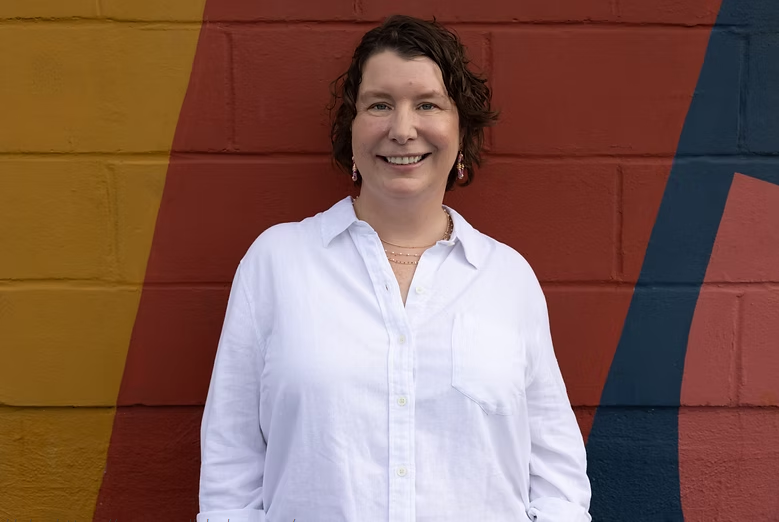
Photo by Molly Haley https://www.mollyhaley.com/
1. You’ve written across middle grade and young adult over the course of your career. Looking back, what first pulled you toward writing for younger readers?
There’s that line in The Body by Stephen King (it also shows up in the movie Stand By Me): “I never had any friends later on like the ones I had when I was 12 – Jesus, did you?” I think that’s true of books, too. I don’t think anyone loves a book like a kid loves a book. When I was in college, I remember having animated, deep discussions about the books we loved as kids and teens. When I write for kids, I feel that same intensity.
2. You write both grounded contemporary stories and more speculative ones. What draws you to one versus the other when starting a new project? And when you move between them, what stays consistent for you as a writer?
I am very interested in how the past impacts the present on a global and personal level. So, a book like The Water Castle has chapters set in the past that feature ancestors of the main characters. Good and Gone, one of my young adult novels, is a road trip story in which a sister, brother, and friend go in search of a missing rock star. Underneath it all are traumatic events that the main character and her brother each went through.
Or, The Spy Catchers of Maple Hill is set in the 1950s, but it’s also about today, and the dangers of rushing to judgement. Even The Firefly Code, though sci fi, follows this model. The past for the characters (our present) directly impacts the kids in the book. When kids read it, they pick up on that.
3. Your work often blends big ideas with very grounded, human characters. Which tends to come first for you, concept or character?
A lot of times I don’t know what I’m writing about in terms of theme until I’ve written a first draft. With The Firefly Code, I had the concept of this utopia and I had my characters, but it wasn’t until I was well into it that I recognized the questions I was grappling with. My kids were still very young at the time and I had a lot of questions about what it means to be a good parent. I wanted to give my kids the freedom that I had as a child, and so I imagined a world that was perfectly safe for kids to be free (and included healthy meals delivered daily, thank you very much).
Once I figure out the theme, I go back and hone it. The first chapter of The Firefly Code changed a lot from draft one to final version. That chapter ends with the line “But from behind this fence, it seems impossible that we could be anything but safe.” That line sets up the rest of the story. What is the purpose of the fence? What does it mean to be safe? But I had to write a whole draft (or two or three) before I could clarify my thinking.
4. The Firefly Code presents a world that initially feels safe, controlled, even ideal… but slowly reveals something more unsettling underneath. What was the original spark for that setting and that kind of “flawed utopia”?
My book ideas often come from a bunch of different observations that collide and spark. With The Firefly Code there was an incident when I was at the gym. A man was running on the treadmill and then just kind of slipped off. He brushed himself off and went to get on a stair climber and the whole line of machines turned off. My writer brain was like, “What’s going on?” My answer would be a spoiler, so I’ll leave it at that.
At the same time, I was working in an independent school after having worked in a low-income public school, seeing the differences in opportunities. And I read an article about how families in Silicon Valley may live in cities and towns, but they are really part of self-contained ecosystems with their own “public” transportation systems, kids all going to the same private schools, and so on. They had isolated themselves from the world around them. So I pushed that idea and that brought me to my tech-centered utopia.
I love that you call it a flawed utopia. Some people ask if it’s a dystopia and I always say no. The difference for me is that a utopia is trying to be great, whereas in a dystopia, the world is explicitly bad, whether it’s because of an apocalypse, authoritarian government, or even zombies. I drew a lot of inspiration from Lois Lowry’s The Giver which, I would argue, is also a utopia not a dystopia. It’s a discussion I love to have with readers!
5. As someone who grew up with ‘80s kids’ adventure movies, there’s a bit of a retro feel to this, with the main characters spending a lot of time exploring their neighborhood unsupervised and making unexpected discoveries. Was this intentional on your part, or just a natural result of how the story unfolded?
For sure. I was definitely going for “kids on bikes save the world” – E.T., The Goonies, or, more current, Super 8. The book came out around the same time as Stranger Things, and I’ve seen it placed on lists of books for kids who like that show. Obviously it’s not horror in the same way – it’s kids on bikes.
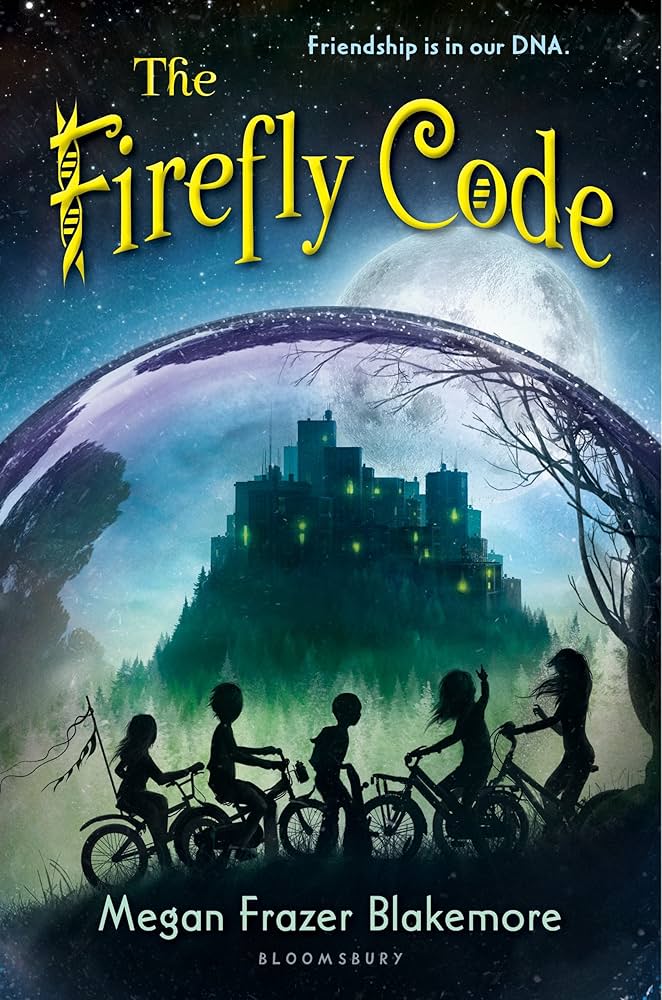
6. The Daybreak Bond continues the story. Did you always envision it as two books, or did that develop over time?
I had actually envisioned three books: The Firefly Code, then a book set totally outside of Harmonie, and then a book where the two groups came together. The publisher argued that a kid who read the first book would not want to wait to find out what happened to The Firefly Five, so we decided to make it a duology.
I do sometimes think about creating a third book, but it would be YA rather than MG. It would bring the kids back together when they are teens.
7. From your site, it appears that your first novel for adults is coming out in 2027 – a cozy murder mystery as Meg Blakemore. What led to this shift to an adult audience, and do you still plan to continue to writing for younger readers?
I definitely plan to continue writing for younger readers. In fact, I have a picture book slated for publication in 2027: The Attic Dragon, to be illustrated by Christopher Thornock.
The cozy mystery started as a project during COVID – an escape, really – and I had so much fun with it. When Harriet Met Homicide definitely shares DNA with my other books. There is the impact of the past on the present as well as a focus on the importance of stories. I hope adult readers who enjoyed my books for young readers will enjoy this one, too. What’s really wild, though, is that I’ve been doing this long enough that some of my young readers are now adults. I hope they find it, too!
You can learn more about Megan here.