
Something L.J. Monahan Always Keeps in Mind? Don’t Write Anything That Might Make a Student Look at You Funny
L.J. Monahan came to my attention due to an interaction with another author I’ve interviewed here — Rae Knightly. She and a number of other indie sci-fi authors (including Monahan) had gotten together for a joint promotion where each of them offered one of their eBooks for free or 99 cents. Suffice it to say I picked up a number of books that I’m still working my way through, some of which will likely make their way to KAWAL.
Monahan’s The Escapers stood out to me from the first page, though, due to its excellent blend of high stakes, anxiety, and resilience that kids today are navigating in real life. Yes, there’s an alien invasion and a forced labor camp, but time is also given to Bryce’s outsider status, and the battles these kids go through for personal autonomy. In short, it perfectly captures the unsettling feeling of growing up in a world where the future feels wildly unpredictable.
It’s intense and dark, yet manages to remain grounded, deeply human, and wildly fun.
As a veteran middle school history teacher, Monahan has a front-row seat to the daily lives, humor, and anxieties of the exact audience he writes for — maybe that’s why he’s so good at it. I was thrilled he was willing to answer my burning questions about crafting stories that draw tweens in, surviving real-life roller coaster crashes, and the realities of life as an indie author.
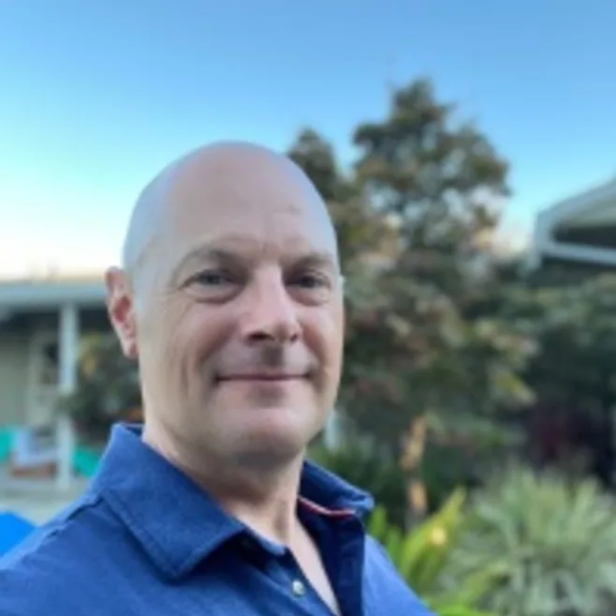
1. You’re a middle school history teacher, which means you spend every day around the exact target audience for YA sci-fi. (As the parent of a 14- and 11-year-old, thank you for your service and I’m sorry.) Instead of asking how teaching influences your work, what is something your students do or say that has made you completely rethink how you write dialogue or handle teen interactions on the page?
Great question. I wouldn’t say there is one thing my students say or do that influences me. I have been teaching sixth grade for more than 20 years. In that time, I’ve had thousands of 11- and 12-year-olds move through my classroom. So at this point, I really understand the mindset of a tween: the maturity level, things that interest them, etc. This helps when I’m plotting and trying to come up with twists that might interest a reader that age. Of course it has to interest me, too!
2. Your author bio features an intriguing detail, but I couldn’t find any additional information about it beyond that one line. I’m talking, of course, about “once fell off a roller coaster.” So… my question is two-fold: 1) What happened?! 2) Beyond being a great trivia fact, did going through a high-adrenaline, life-threatening moment in real life change the way you describe physical panic and tension in your action scenes?
When I was 8, my family and I went to an amusement park in North Carolina during a vacation (I grew up in California). We spent the day enjoying the rides and games. At the end, we found a small roller coaster – it may have been 15-20 feet off the groound. My cousin Tommy and I rode the roller coaster once, and since there was no line, I talked Tommy into riding it again. He reluctantly agreed.
The second time around, the car we were riding in stopped. I stood up, but Tommy told me to sit down, and I did. Then the car tipped sideways, spilling us out. My cousin hit the ground first, and I fell on top of him. Luckily, the car didn’t land on us or we might have been seriously hurt or killed. Tommy broke his arm in the fall and was taken to the hospital in an ambulance. I split my lip but came out of it otherwise unscathed.
I don’t know if falling out of a roller coaster influenced my writing, but I still remember watching the frame of the rollercoaster pass by as I fell to the ground. It made me realize that life doesn’t always go as you expect it to. So maybe I try to bring that to my stories.
3. As someone balancing teaching history, writing novels, and family life, what does your actual drafting routine look like? Are you a disciplined, every-day writer? Someone who has learned to write anywhere using any possible device? An outline-heavy “plotter” or a discovery-style writer?
I write nearly every morning. I don’t write thousands and thousands of words a day like some writers. Five hundred to one thousand words is a good day. I write in the morning before I go to school. If I have the time and energy, I do more drafting when I get home.
I’m a pantser or discovery writer, but as I’m writing, I roughly know where I want the story to be at the quarter mark, halfway point, and as the climax begins. Then I can just connect the dots. I’ve tried plotting, but it just didn’t work for me. I have to figure it out as it goes along.
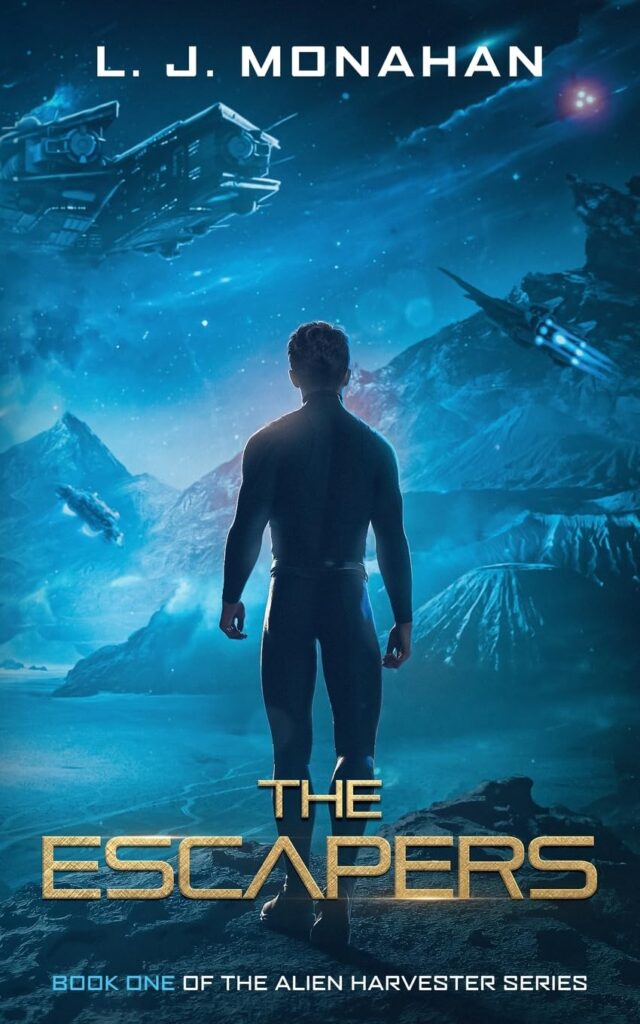
4. On to The Escapers. Many alien invasion stories focus on military defense or total annihilation, but your book zeroes in on a forced labor camp designed to extract blue minerals from dormant volcanoes. Why did having your protagonists engage in forced resource extraction appeal to you more than, say, simply having them mount a rebel defense? What did you want the labor camp and mineral extraction to tell us about the specific biology and culture of the Imjac?
I remember hearing a scientist say that if aliens come to Earth, they won’t be coming on a mission of peace. So why would aliens come to Earth if not for something they need?
I knew I wanted to write a middle-grade/YA story, so my protagonists had to be young. It didn’t make sense to me that young teenagers would somehow know how to mount a defense against aliens militarily (although this will change later in the series). If they were stuck in a prison, the characters would have an immediate goal – escape – and would have to work together to achieve it.
5. Bryce and his cousin Amanda share a deep family bond tested under extreme survival conditions. How did you structure their dynamic so that their relationship feels grounded in real family history rather than just plot convenience?
I don’t know if I’m always successful at this, but I try to make my characters feel like real people. I wanted Amanda and Bryce to have an honest relationship that cousins might have. Cousins disagree and argue, but at the end of the day, care about each other. And as two only children that lived together, Bryce and Amanda have more of a sibling relationship than typical cousins. As the series continues, Bryce and Amanda will be depending on each other more and more.
6. I’ve only read the first book, but know a bit about the rest of the Alien Harvester Series from my research. Without going too much into spoiler territory, let’s say that I know you scale up your worldbuilding as the books continue. What did you want this broadening and deepening of the scope to show us about Bryce’s character arc, and do you believe you were able to do this without losing the intimate personal stakes of Book 1?
I hope so. The story always centers on Bryce, so as the stakes get higher and his worldview expands, we see it through his eyes. Worldbuilding is hard for me. I’m amazed when I read authors who get it right, who can create places and settings so realistic that you feel like you are there.
Because of his ability with the alien tech, Bryce is put into positions that a teenager normally would be in. At the end of the day, I wanted readers to see that Bryce, other than his ability with the alien tech, was an ordinary kid in extraordinary circumstances.
7. Other sci-fi concepts you’ve explored so far involve gladiators and bounty hunters. Looking at these next to the Alien Harvester series, there seems to be a reoccurring theme of escaping captivity and fighting for autonomy. Is this a trope you intentionally set out to explore, or does it naturally surface whenever you sit down to write?
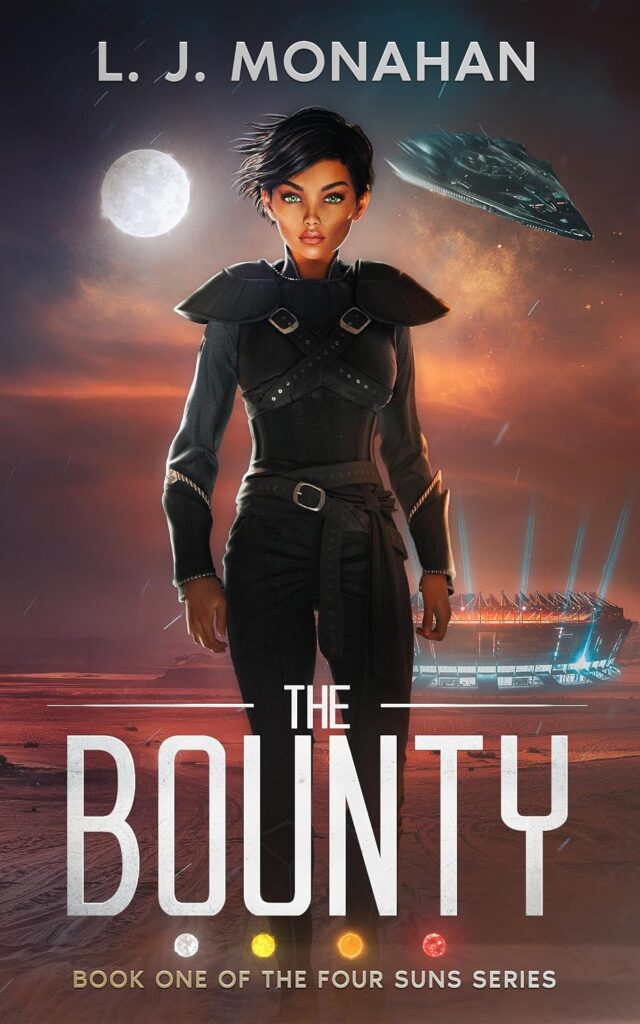
I want my characters to fight for something. Other than your life, what’s more important than freedom? I also think there is a theme of injustice in my books (and in most books). Bryce and Jaz, the main character from my Four Suns series, have had their lives turned upside down because of antagonists’ selfish motivations. Injustice is something we can all relate to, and I hope readers can understand where my characters are coming from.
8. YA fiction often covers dark themes like loss, occupation, and war alongside adventure. How do you decide where the line is between real emotional weight and keeping the story accessible — especially in books aimed at younger teens?
There is death in my stories, but I stay away from gore. gratuitous violence, and sex. My books are in my classroom library (and the school library). I never want a student reading my book to look at me funny because of something I included in a story. The bottom line is you can have a story with emotional weight without getting too dark. And as they get older, darker stories will be waiting for them.
9. Looking back over your career so far, what has been the biggest surprise or unexpected hurdle you encountered in the self-publishing/author journey?
When I first published The Escapers, I naively thought that was the end of the journey with the book, that somehow it would sell itself. Little did I know, publishing the book was just the first step. I had no idea of the relentless marketing that is part and parcel of being an indie author.
Four years and three books later, I realize that when you’re an indie author, you also own a small business. You can publish a book and ignore it, but you likely won’t get many sales. If you want to get your book in people’s hands, you have to put yourself out there and discover ways for people to find your book. There are some parts of marketing that I enjoy, like in-person events, and others, like social media, that I like less. You just have to find what works for you – and trust me, I’m still learning.
10. What’s next? And is there a book or genre that you’ve been itching to try but just haven’t taken the plunge yet?
The Prisoner, book two in the Four Suns series, comes out in October. I’m currently drafting the third book and final book in the series which I hope to publish in the middle of next year. After that, who knows?
You can learn more about L.J. Monahan here.